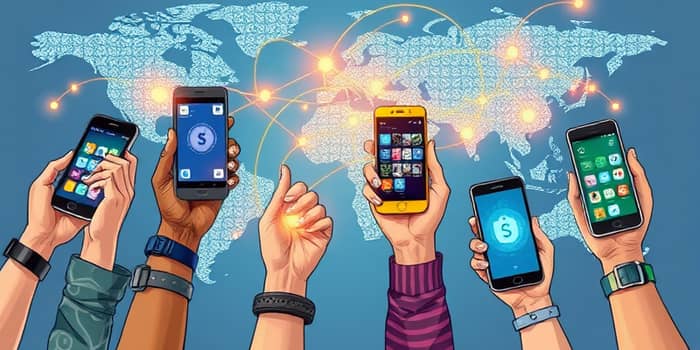
The world of finance has undergone a profound transformation in recent years. As we move into late 2025, digital wallets stand at the forefront of this change, offering consumers unprecedented control over how they pay, transfer, and manage their money.
This article delves into the evolution, adoption, and future of these innovative platforms, providing readers with practical insights and inspiration to harness their potential in daily life.
What Is a Digital Wallet?
A digital wallet is more than just a mobile app; it is a comprehensive financial ecosystem designed to simplify transactions. These applications or services can store payment, identity, or loyalty credentials electronically, allowing users to complete purchases or transfers with a tap, scan, or click on devices such as smartphones, wearables, and computers.
Digital wallets may hold prepaid balances, connect directly to bank accounts, or even secure cryptocurrencies. Major enabling technologies include NFC (Near-Field Communication), QR codes, and Open Banking integrations, all working together to deliver convenience and speed.
Global Growth: Adoption, Usage, and Value
Digital wallets have seen explosive growth around the world. By 2025, there are an estimated 4.5 billion users worldwide, accounting for over half of the global population. This rapid adoption is driven by the desire for faster checkouts, seamless peer-to-peer transfers, and integrated loyalty rewards.
In 2024 alone, consumers conducted around $10 trillion in global transactions via digital wallets, with projections indicating growth to nearly $17 trillion by 2029 and surpassing $33.5 trillion by 2030 as the digital payments market continues its upward trajectory.
Major Markets: Asia, US, and Europe
While digital wallet usage is truly global, some regions lead the charge. In the Asia-Pacific market, dominated by platforms such as Alipay and WeChat Pay, wallet spending reached $36.8 trillion in 2024. Adoption rates in markets like India, Indonesia, and Thailand exceed 89%, with India alone at 90.8%.
In the United States, 65% of adults now use digital wallets, up from 57% in 2024. Online transactions via wallets account for 39% of digital commerce, and in-store usage rose to 16%, with forecasts expecting 52% and 30% respectively by 2030. Apple Pay remains the leading US service, capturing roughly half of the market.
European markets are also embracing these solutions, with digital wallets representing 33% of online payments and 14% of point-of-sale purchases in 2024. By 2030, wallets are predicted to handle nearly half of all digital consumer transactions across the continent.
Key Players and Market Share
The competitive landscape features both long-standing names and emerging innovators. The following table outlines leading digital wallets, their user bases, and regional focuses:
These players compete on service variety, user experience, and merchant acceptance, while PayPal remains a ubiquitous option across multiple platforms, used by over 88% of Apple Pay customers.
Modern Use Cases
Digital wallets are no longer limited to simple payments. Today’s consumers rely on them for a range of financial activities:
- In-store contactless payments using NFC or QR codes
- Online e-commerce checkouts for faster purchases
- Peer-to-peer transfers via services like Venmo and Zelle
- Bill and utility payments, ticketing, and subscription services
- Storing digital IDs, loyalty cards, and access keys
These versatile features are driving consumer preference, with wallets accounting for 32% of global POS transactions and 53% of online purchases in 2024.
Drivers of Adoption
Several factors fuel the rise of digital wallets around the globe:
- contactless and frictionless payments for faster checkouts
- Enhanced security protocols reducing fraud concerns
- Integration with loyalty programs and BNPL offerings
- virtual cards and digital identity features enriching user experience
- Financial inclusion for underbanked populations
Technology & Innovation
Technological advancements underpin the wallet revolution. NFC remains the dominant method for tap-and-go payments, while QR code transactions in Asia are projected to hit $8 trillion by 2025. tokenization replaces sensitive data with tokens, ensuring that every transaction is protected against breaches.
Financial institutions and fintech firms also deploy machine learning in fraud detection, leveraging AI to identify unusual patterns and stop unauthorized activity in real time. Meanwhile, Open Banking APIs are expanding interoperability, enabling seamless transfers between accounts and proactive financial management tools.
Challenges and Opportunities
Despite remarkable progress, the digital wallet industry faces its share of hurdles. Regulatory frameworks vary significantly across countries, creating compliance complexities for global players. Additionally, multiple wallets per user can lead to app fatigue and fragmented balances, challenging providers to deliver truly unified experiences.
Security and privacy remain paramount concerns, spurring ongoing investment in biometric authentication, encryption, and fraud monitoring. Yet each challenge also represents an opportunity: innovators who can streamline services, enhance safety, and simplify cross-border payments will capture new segments of users.
The Future Outlook
Looking ahead, the evolution of digital wallets is poised to accelerate:
- Seamless integration of digital identity and government services
- Expansion into cryptocurrency and tokenized asset management
- Broader acceptance across small businesses and emerging economies
- Enhanced personalization through AI-driven spending insights
- nearly ubiquitous digital wallet usage by 2030
As these platforms continue to evolve, consumers and businesses alike will benefit from greater financial agility, deeper analytics, and an ever-expanding ecosystem of payment options. By embracing digital wallets today, users can unlock a future where money management is more intuitive, secure, and connected than ever before.
References
- https://www.globenewswire.com/news-release/2025/11/10/3184212/0/en/Digital-Wallet-Users-to-Surpass-Three-Quarters-of-Global-Population-by-2030.html
- https://capitaloneshopping.com/research/digital-wallet-statistics/
- https://www.digitalsilk.com/digital-trends/fintech-trends-statistics/
- https://sqmagazine.co.uk/apple-pay-statistics/
- https://cheqly.com/digital-wallet-trends-2025/
- https://www.statista.com/topics/11646/digital-payment-trends/
- https://datos-insights.com/blog/digital-wallet-revolution-strategic-implications-financial-services/
- https://nchstats.com/apple-pay-vs-google-pay/
- https://www.juniperresearch.com/research/fintech-payments/core-payments/digital-wallet-research-report/
- https://www.statista.com/statistics/1227576/mobile-wallet-transactions-worldwide/
- https://www.chargeflow.io/blog/apple-pay-vs-google-pay-statistics-adoption-rates-market-share
- https://www.thebusinessresearchcompany.com/report/digital-wallet-global-market-report
- https://worldline.com/en-us/home/main-navigation/resources/blogs/10-key-payment-trends-shaping-the-market-in-2025-and-why-they-matter-for-software-providers